
Introduction
In the ever-evolving realm of interior design, few materials have garnered as much attention and acclaim as microcement. Its rise to prominence, especially in kitchen spaces, is a testament to its unique blend of functionality and aesthetic appeal. This article aims to provide a comprehensive exploration of microcement’s transformative role in modern kitchens.
Understanding Microcement
Microcement, at its essence, is more than just a building material. It represents a shift in design thinking, a move towards materials that are both versatile and durable. Comprising a blend of cement, polymers, resins, and color pigments, microcement offers a finish that is smooth, adaptable, and tailor-made for contemporary spaces. Its ability to be molded, colored, and textured makes it a favorite for designers seeking to break the mold of traditional interiors.
Why Microcement in Kitchens?
- Durability and Resistance: One of the standout features of microcement is its durability. Kitchens, being high-traffic areas, require materials that can withstand daily wear and tear. Microcement, with its hard-wearing properties, is up to the task.
- Waterproofing: Anyone who’s ever had a kitchen spill knows the importance of waterproof surfaces. Microcement’s inherent waterproofing properties make it ideal for countertops and floors alike.
- Design Versatility: From earthy tones to vibrant hues, microcement can be customized to fit any design palette. Its adaptability ensures that it complements various kitchen styles, from rustic to ultra-modern.
- Easy Maintenance: Say goodbye to stubborn stains. Microcement’s smooth surface ensures spills can be easily wiped away, making kitchen clean-ups a breeze.
Designing with Microcement
The true strength of microcement lies in its adaptability. It’s a material that doesn’t impose limits but instead encourages creativity.
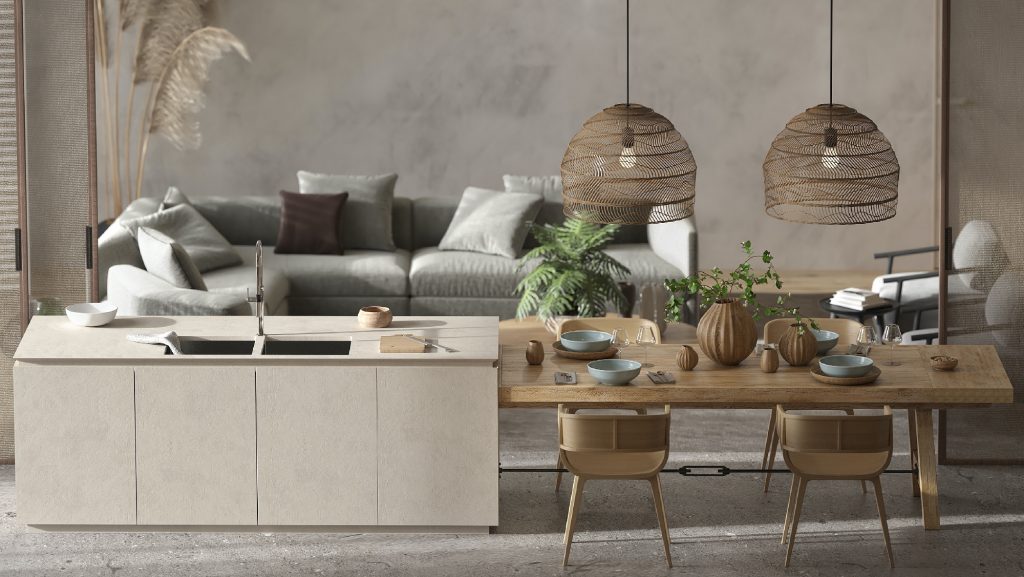
- Countertops: The kitchen countertop is often the centrepiece. With microcement, you can achieve a range of looks, from the elegance of marble to the ruggedness of slate, all without the associated costs of these materials.
- Floors: Flooring needs to be durable, but that doesn’t mean it can’t be stylish. Microcement floors offer a balance of both, providing a sturdy surface that doesn’t skimp on aesthetics.
- Walls and Backsplashes: Gone are the days of tedious tile maintenance. Microcement backsplashes are not only stylish but also practical, offering a seamless surface that’s easy to clean.
- Sinks and Fixtures: Beyond just countertops and floors, innovative designers are even incorporating microcement into sinks and fixtures, offering a cohesive look to the entire kitchen space.
Environmental Impact of Microcement
In today’s eco-conscious world, the sustainability of building materials is paramount. Microcement, with its low waste and long lifespan, offers an eco-friendly alternative to more wasteful kitchen materials. Its production requires less energy compared to traditional materials, and its durability means reduced replacement and waste in the long run.
Cost-Effectiveness and ROI of Microcement Kitchens
Every homeowner knows that investments in the home aren’t just about the present; they’re about the future.
- Longevity Equals Savings: The initial outlay for a microcement kitchen might be higher than some traditional materials. However, its longevity means savings in the long run, as the need for replacements or major repairs is significantly reduced.
- Boost in Property Value: Modern homebuyers value quality and design. A kitchen that boasts microcement surfaces can be a major selling point, potentially boosting property value.
- Energy Efficiency: Microcement’s thermal properties can lead to energy savings. Its ability to retain heat during colder months and remain cool during warmer periods can contribute to reduced energy bills.
Conclusion
The world of kitchen design is witnessing a microcement revolution. It’s a material that promises durability, versatility, and modern aesthetics. As homeowners and designers continue to seek out innovative solutions for modern living, microcement stands out as a beacon of contemporary design potential.
Conclusion
Microcement, with its myriad of benefits and design possibilities, is revolutionizing kitchen design. Its blend of functionality and aesthetics makes it a worthy contender in the world of interior design materials. As we look to the future, it’s clear that microcement’s role in kitchen design is only set to grow, offering homeowners a perfect blend of style and substance.